
We’re very lucky. Taking a photograph has got so much easier since the mid-19th century.
This post builds on last week’s themes to question whether that’s such a good idea.
The first photographers were clever people skilled in optics and chemistry (the original reason why, until digital took over, you took your holiday snaps to the local chemist to have them developed). It was a complex process. Early photography required you to coat a single glass plate in a rather dangerous collodion chemical solution containing silver particles in suspension, then load it into the camera.
After the exposure (that would have been measured in minutes, not fractions of a second), the glass plate had to be removed again and dipped in different nasty chemicals to develop an image and then fix it permanently. Of course, most of this had to be done without any extraneous light getting onto the glass plate. And it all had to be done within a quarter of an hour too.
What a faff. Challenging for landscape photographers on location. But we aren’t finished yet.
The size of the glass plate dictated the final image size – you could not choose enlargements at the time. So if it didn’t fit your trendy new IKEA picture frame, you were scuppered. Both the plates and camera were often huge and unwieldy. Furthermore, the long exposure time meant that subjects had to hold still for a long time. Metal neck braces were used to stop your head from wobbling about.
But, because humans can’t help but look at things even when told to keep still, eyes would often come out milky and then need to be retouched by hand (or possess the ability to stare inanely and look like Marty Feldman).
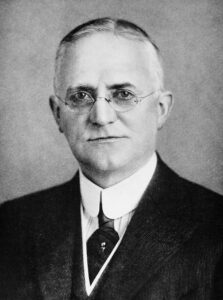
When photographic film was invented by George Eastman (of Kodak fame) in 1885 it made the process far more portable and convenient. Cameras could be made much smaller and usable by anyone. By now, film was more light-sensitive too, making exposures shorter. Each film could contain multiple images, and be developed together as a single batch. As Kodak said a hundred years ago: “you press the button, we’ll do the rest”.
Then, as we entered the digital age, we gained the ability to edit them just as much as we wanted. We could store thousands of perfect images on tiny cards. No development or printing was needed. The results were instantaneous. Cameras themselves became so small that they conveniently fit into virtually anywhere – cars, fridges, doorbells, baby monitors, and, of course, into the palms of our hands thanks to the smartphone.
It’s a truly amazing story of democratisation and technical progress. As Martin Parr said: “Everyone is a photographer now”.
Forgotten something?
Have you ever returned from holiday with a nagging feeling you’ve left something behind? I was in Wales a few weeks ago and before finally vacating the holiday cottage I must have checked every cupboard, drawer and the fridge three times. But still, I wondered about it on the drive back.
Recently I’ve been starting to feel the same about photography. A nagging sense that I may have left something behind.
But what, exactly?
For me personally, there have been three catalysts for this: closer involvement with the history of photography, Social Media and AI.
At WW Winters it’s hard not to be in awe at the prospect of a million photographic negatives (mostly those old glass plates) waiting to be rediscovered. This is without doubt a remarkable social and cultural history. I’ve written of its wonders here. But unless those negatives had been kept, in an accessible form for future generations, none of this would have been possible.
The same can be said for millions of family photo albums in lofts across the country. A relative, family historian or Peter Cohen can later find them and marvel at their revealed stories. I worry that future generations may lose that. They may only know of the images shared on social media. The rest will remain locked in the cloud behind an unknown password, or destroyed with the phone itself.
In last week’s blog I highlighted the growing discomfort of creatives as their work is assimilated, into the gargantuan mouths of the AI training algorithms. We noted that we lose that beguiling secret sauce behind every photograph – the knowledge that the thing we are looking at was once real.
But I wonder whether we are also losing something else. Today, when we stand at a live concert staring at the back of our phone while it records it we do preserve the fact that it happened. We gather evidence to show our envious friends the next day. But we also lose the spontaneous emotive engagement of being there in the first place.
Ever watched a Shakespeare play on telly instead of live on stage? Not quite the same is it?
Movie subtitles are more popular than ever – because we can then keep track of the unfolding plot while simultaneously scrolling through social media.
In short, the question I’m exploring here is whether we make or take photographs? Are we making containers for memories, or taking a record of events? Gathering evidence at the expense of engagement in a world where a photo-like AI image may not even be evidence at all.
Nice to be here
One essential ingredient in any photo is understanding why you are taking it. What are you documenting here? What is it that excites you about what you see through the viewfinder? Photography forces us to be in the present, at least for a slice of a second.
All the faffing about with exposure, composition – and waiting for the idiot in the background to move – forces us to focus on being right here in the now. These things are all part of that real-time experience. The camera helps us to notice that we are experiencing these moments.
What if we could do more of that? We can. Manual cameras and analogue film force us to slow down and occupy that precious space for longer. Twiddling a knob to focus on something makes you look at it. Really look at it. A crank has to be turned before you can do it again. When the end of the film has been reached – after just 1, 10, 12, 15 or 36 images (inversely proportional to the cost of the camera, oddly), you are forced to stop. Reload. Reconsider.
This feels important. It is important – ask these guys. Yet we are letting it slip away in an endless quest for fast, convenient uploading to social media.
So get your old cameras out (one of my favourites is an Olympus that belonged to my dad) and put the pictures in an album. The photographic negative is the original non-fungible token or NFT. It exists. You have it. It happened. There’s only one of it. That makes it priceless.
Another beautiful thing about film photography is that it is a great leveler too – there are no whizz-bang show-off latest models, they are all decades old. Its the process and end product that count. They are conversation starters (People will stop you and say “wow – I used to have one of those!”).
One of the most inspiring practitioners I know, Nuala Mahon, makes her own pinhole cameras. She also uses seaweed to develop the film. A noble quest to inspire the world to become a cleaner, more sustainable, place through photography.
I find myself back in that strange liminal place we were once so eager to eliminate: Having sent off some films, I’m anxiously waiting for the results to arrive on the doormat. But this time around it doesn’t feel like an inconvenient delay on the hurried path to Instagram. Instead, It feels like photography is a unique and considered way of seeing again. A way of being again. And that feels rather special again.
Main photo: Tom. Ilford HP5+ 120 developed in Ilford ID-11, ISO 400.
Film photography as part of a self determined ritual also?
Focus, literally, and intent.
Being part of something greater than the singularity we imagine we inhabit?
Very good point Steve. Selecting a more considered, slower approach as a ritualistic investment in the self.
WOW thanks for the mention Ian. This has given me courage to keep going. I made a new camera from recycled wood about a month ago. It’s a beautiful piece. BUT I have not managed to take a single readable image with it yet! Light leaks, photo paper not properly fixed, pinholes not ‘clean’ circles – you mention it I have had them all. But each time I go forth to the beach with my camera I do so with hope and expectation. It doesn’t matter that I have not made a new image. I have gathered more washed up plastic, I have watched the sun rise, I have met another analogue photographer on the beach in search of that magic moment. None of this would have happened with my D800 or my phone.
Wonderful Nuala – keep going!