It was a jolt to arrive at the world’s biggest high street for the Daido Moriyama Retrospective Exhibition from sleepy Derbyshire yesterday morning.
I used to work in London and visit regularly. But on each occasion, I am still assaulted by a slightly threatening sense of hustle and bustle. Being surrounded by so many people yet not knowing who any of them are feels very weird. So here I am, back in a familiar place, yet uncomfortable, grappling to make sense of my new environment once again.
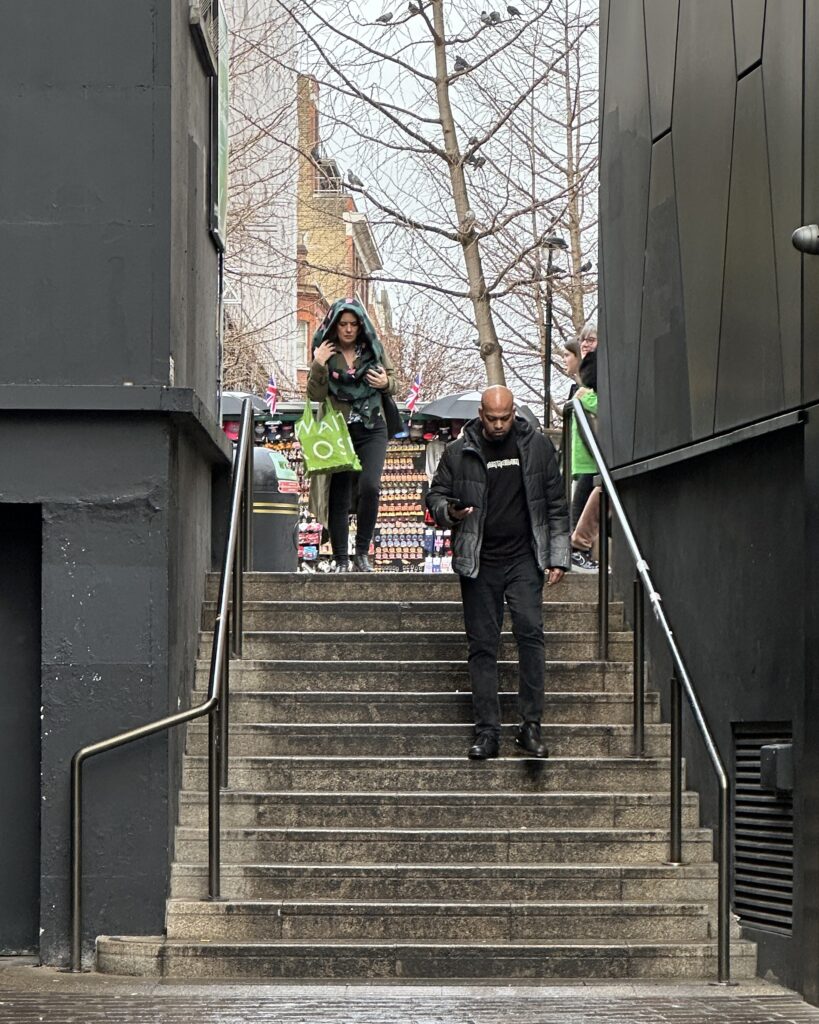
I reflected on this numinous: this same sense of fear, awe and curiosity that drives us to seek the scariest rollercoasters at Alton Towers. As humans, we aim to be stimulated. We want to play with fire. But at the same time, we hope to be safe.
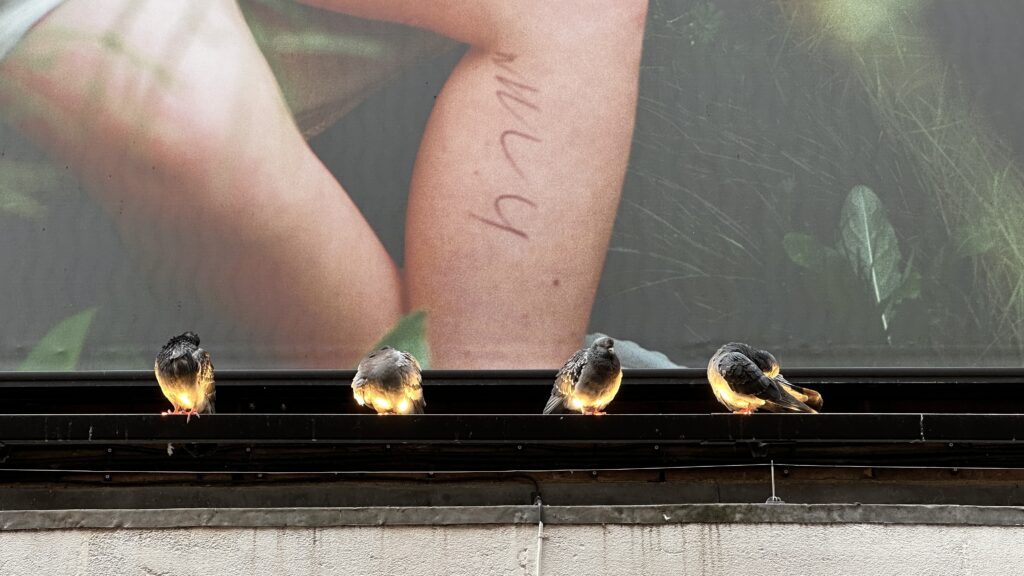
Passing the incongruous sight of four pigeons warming themselves on the precious heat given out by advertising light bulbs, I approached the gallery. I was soon to discover that seeing this same awe and wonder in the mundane was to be the perfect preparation for Daido Moriyama’s Retrospective exhibition at The Photographer’s Gallery.
Earlier work
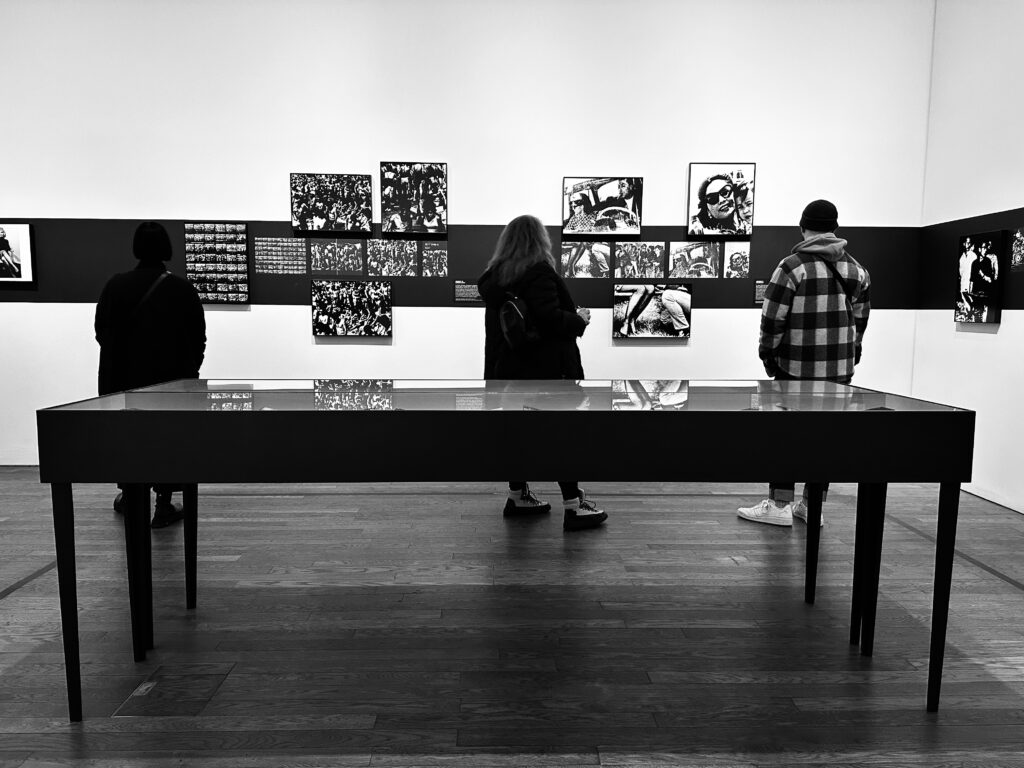
A “riveting, rapturous exploration of the enigmatic” is how Charlotte Jansen described it in her Guardian review. The sheer scale of the exhibition – filling all four floors of the gallery – immersed us fully into Daido Moriyama’s world.
And what a considerable world it is. Moriyama has seemingly made every imaginable thing the subject of his camera over the past sixty years. Stray dogs. Rows of sunbathing men slathered in olive oil. Posters, shop aisles, babies and blossom trees. His images are often of the everyday and frequently gritty, blurry or out of focus. Yet they also hint at something more. There’s an enigmatic sense of something deeper going on. Each image feels strongly of a very particular moment: It’s just that the importance of the moment is not apparent to us, lurking somewhere in those inky dark Tri-X shadows.
Moriyama wanted his work to be easily seen, distributing it through photobooks (which are much more widely available in Japan, not just through specialist photography stores as we see in the West). In one sense, he was promoting the same democratisation of photography that we now enjoy through social media. Provoke, the first photo magazine he joined only ran for three issues between 1968 and 1970, but was popular and its impact was still felt decades later.
A decisive moment
The exhibition itself is split into two sections, the dividing line between them being twofold. Physically, it marks a division between the gallery rooms and staff office. But this also represents the two sections of Moriyama’s photographic career. After Another Country in New York shot in 1971 (published 1974) using consciously lo-fi American Pop Art techniques such as photocopying, Moriyama began to question everything about both himself and photography. Farewell Photography (1971) reflects this crisis through its low-quality, heavily cropped images with no coherent theme.
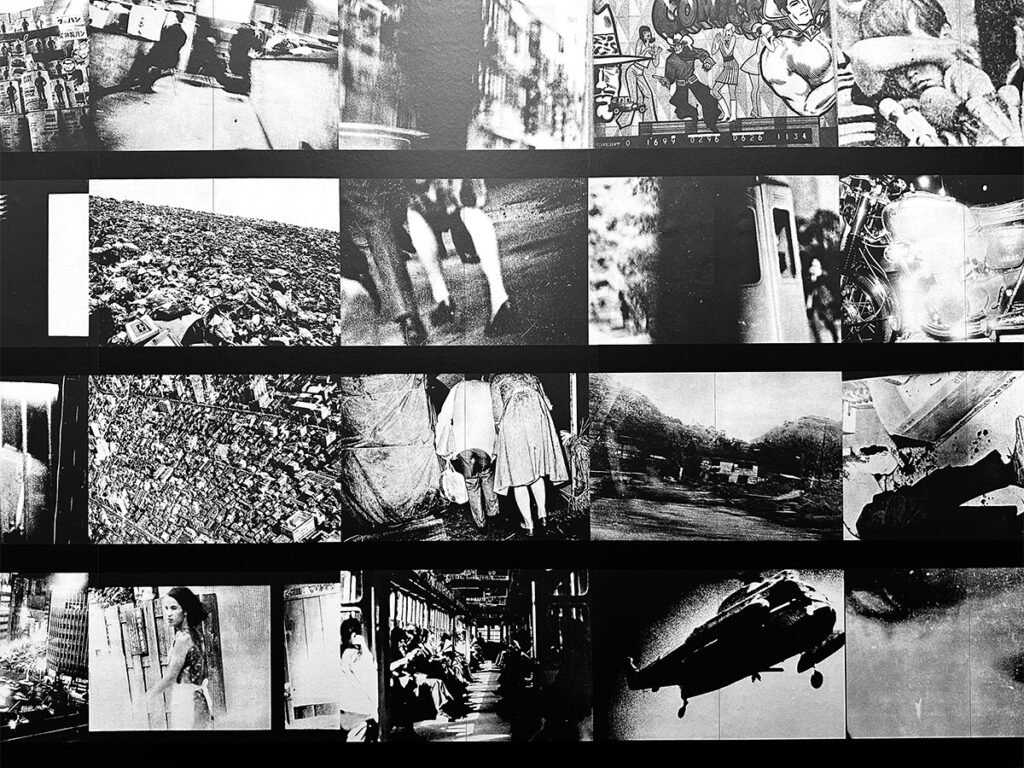
Although looking very much like his swan song at the time, this was the decisive moment. Through this complete breakdown of both himself and the medium, Moriyama unearthed a new way of perceiving photographic reality, particularly in the genre of documentary. Instead of just the ‘what’, Moriyama moved the boundary to include ‘feelings’: the visual portrayal of memories, history and personal experience of the locations he visited. He helped us to understand that the camera can express just as powerfully as it can record.
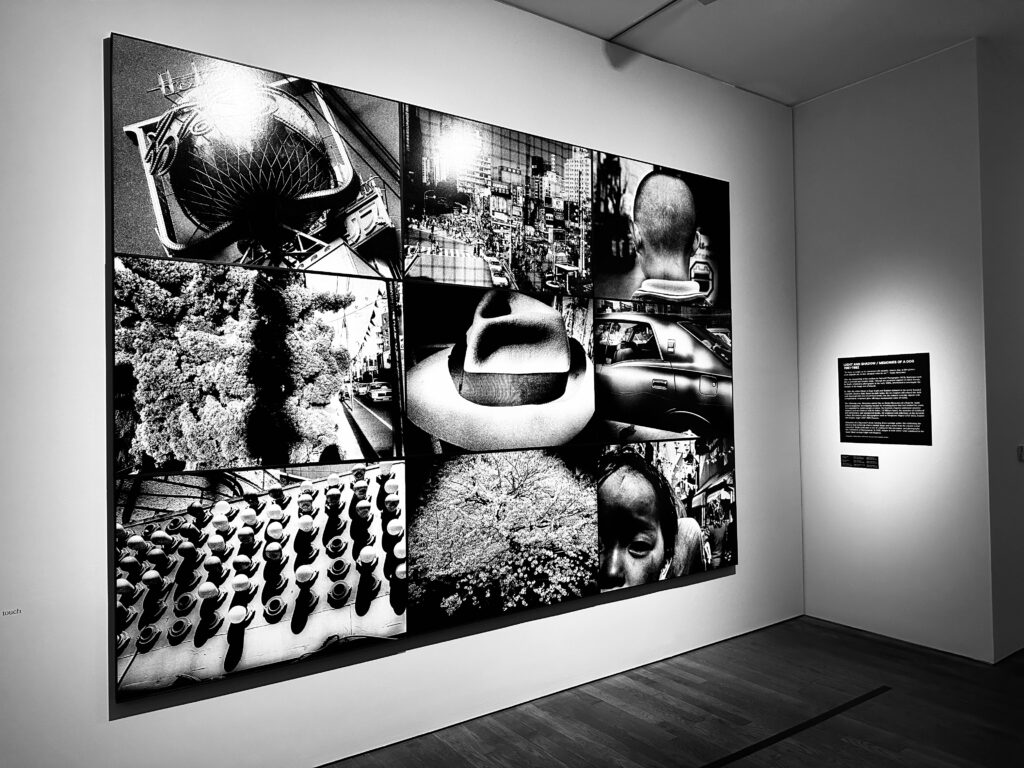
The next time you pick up your camera give this a go. Just like my arrival at Oxford Circus, it’s exhilarating as well as a little frightening. You may end up looking just as intently within yourself as you do the object in front of the lens. For this reason, Moriyama remains one of my most admired photographers. He’s shown us that the camera has endless potential to teach us about ourselves and how we perceive the spaces we occupy, if only we have the courage and energy to do it.
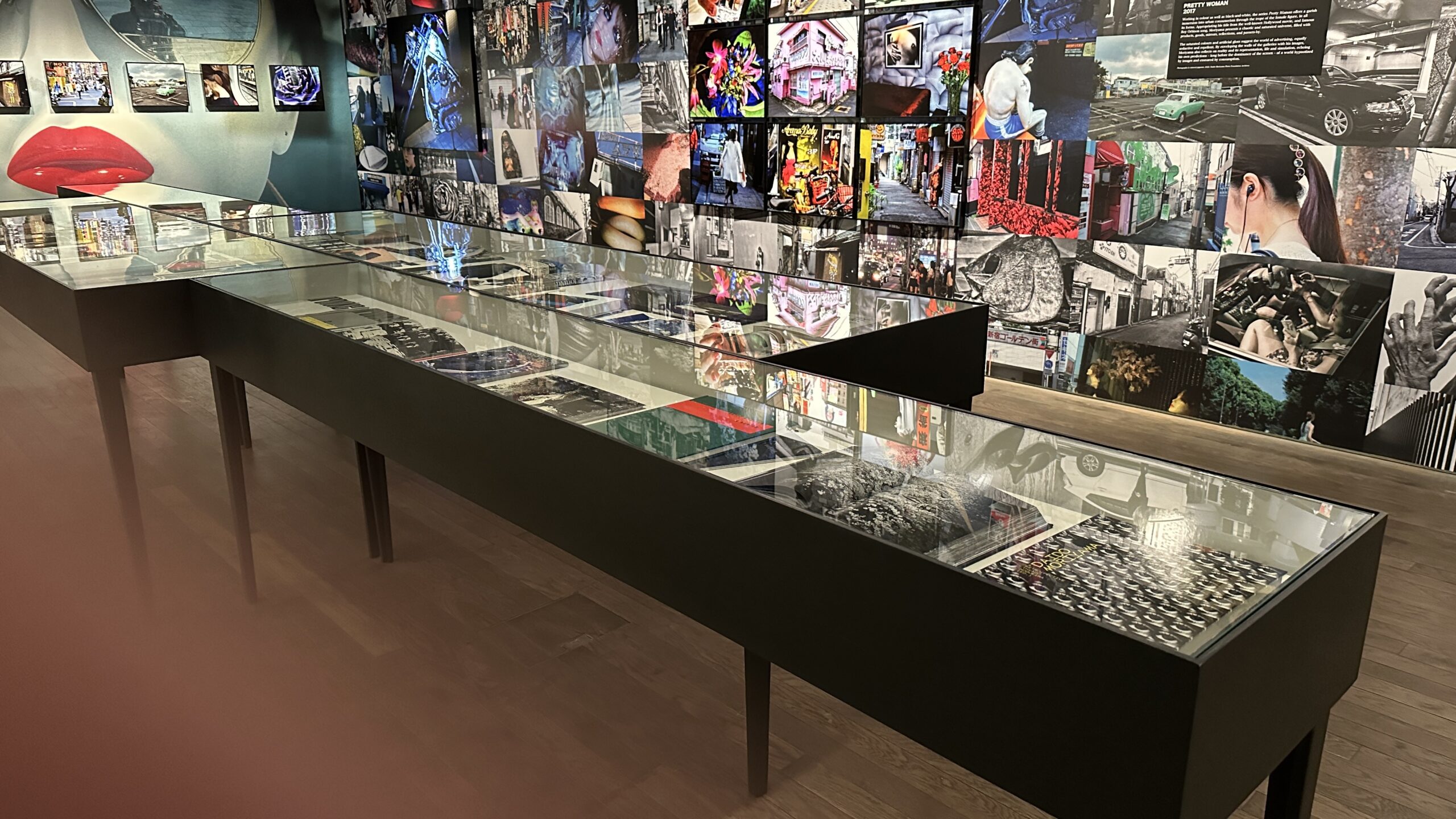
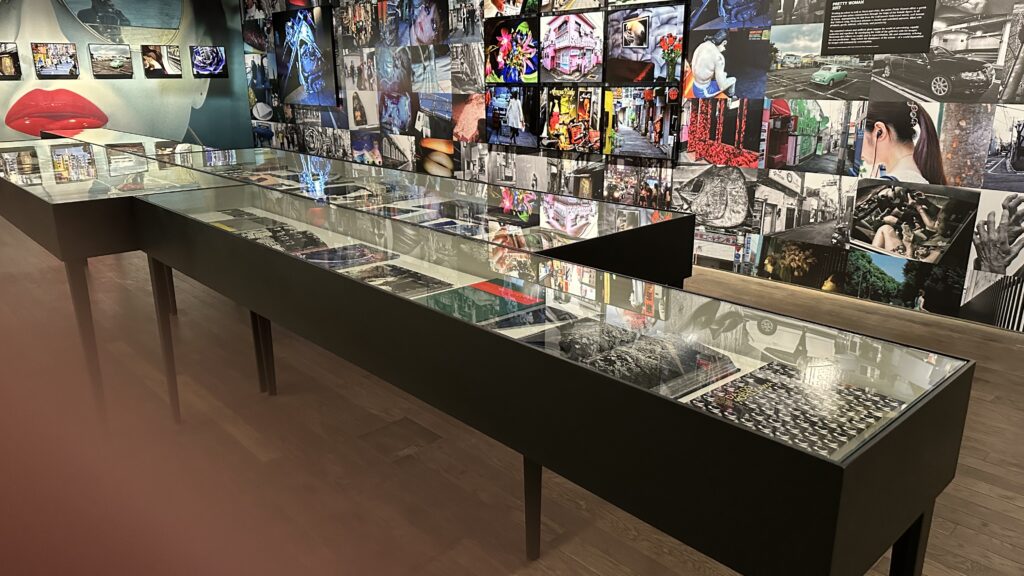
Until I visited the exhibition, I’d not fully appreciated the extent of Moriyama’s more recent colour work. Pretty Woman (2017) is a gargantuan kaleidoscope exploring how society perceives femininity. Its epic proportions virtually filled a gallery floor on its own.
Although this was a Retrospective, Moriyama is still looking forward, blurring the boundaries between past and future. Now in his 80s he shows little sign of stopping and still publishes work through Record, adding to his seemingly endless catalogue. As he says himself, “the past is always new, the future is always nostalgic”.
Thank you so much Ian for guiding us through this retrospective, without giving away too much (!), of one of my favourite photographers.
Going from a community of 160 people to London is almost overpowering for me now…..
Thoroughly enjoyable piece of writing Ian. I have those same kinds of feelings when I travel to London – not an age thing because I’ve always felt that way. Moriyama’s work is such an apt complement to the slightly out of balance feeling.
Many thanks for publishing such engaging material on your blog.
Your approach to showing the intricacies of photography turns your posts truly engaging.
Please keep on delivering such quality content, and thank
you for enriching our understanding of photography.
Warmest regards, Anja
Thank you Anja. Appreciate your kind words.