
With everything going off in the world right now, can art ever be a priority? Just how important is art?
I was asked this question earlier in the week. With wars, humanitarian disasters, climate change, floods, and a cost of living crisis we have bigger things to worry about, don’t we?
The government seems to have taken this into account in setting educational policy STEM subjects (Science, Technology, English, Maths) are getting greater focus over creative subjects such as music and art. This is intended to stimulate growth in the economy and secure Britain’s place in fields such as life sciences, healthcare and, of course, AI now too.
No amount of paintings and sculptures will directly lead to the building of more houses or generate the green electricity we desperately need, that’s true.
You might argue that Banksy applying green paint to the side of a building is, at best, a diversion, at worst, a vandalising waste of time, when set within the context of the world’s current problems.
So did my friend have a point?
Look within
In an increasingly rules-based world, art has no rules. It’s a place where your creative expression is still free. Of course, different cultures place all sorts of rules upon where you can display it. But they can’t stop your imagination and creativity (well, not just yet…).
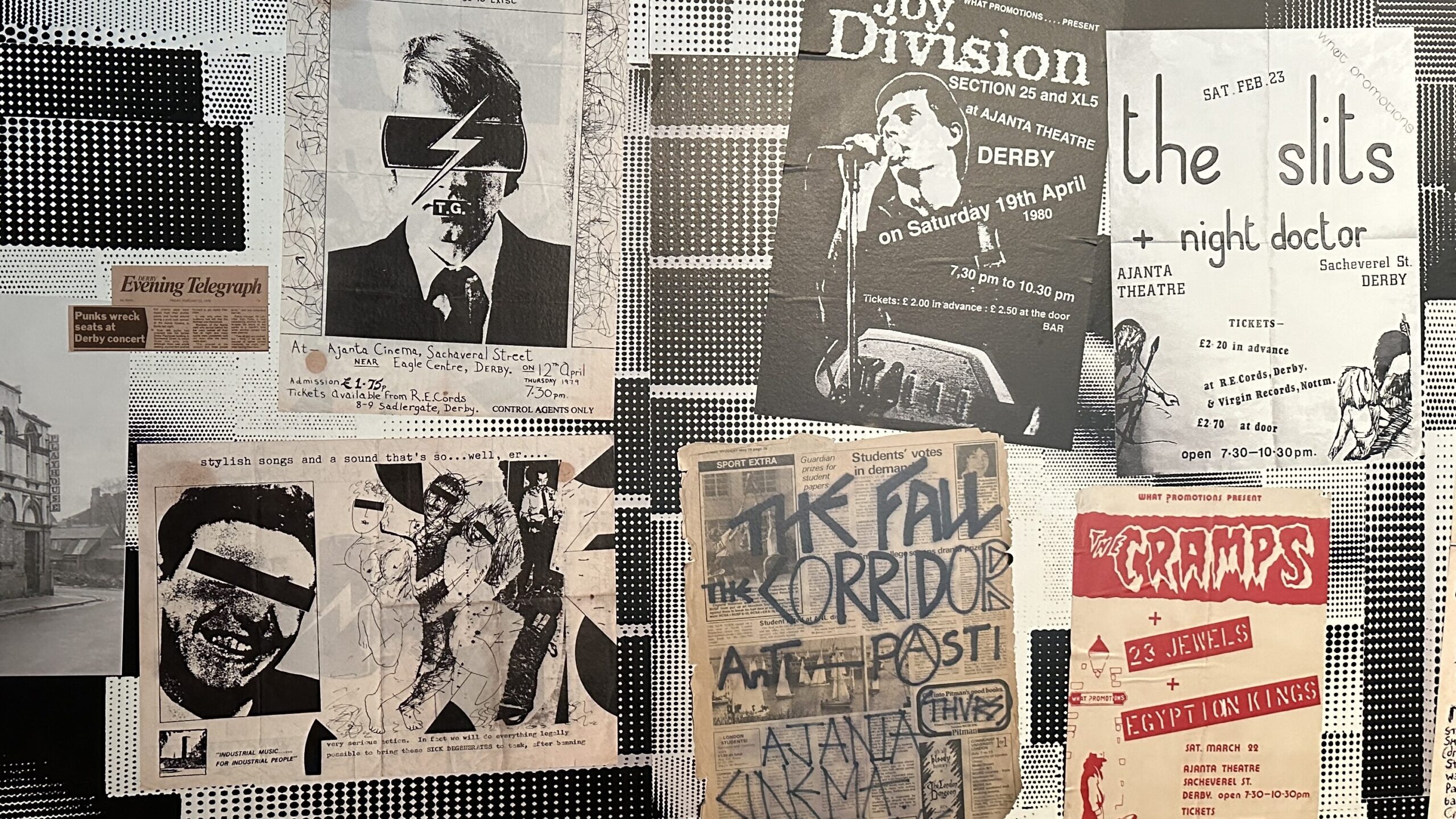
Art is also famous for creating counterculture. Whilst outwardly subversive (with some obvious examples such as punk), subversion is invaluable in helping us to see the other side of every coin – essential for building new directions, acceptance and tolerance in society (I gleefully note that the Hippy Hippo is bang on trend this season with ‘scruffy’ being the new haute couture).
Feeling free to express yourself can be immensely important for well-being. Not everyone feels comfortable expressing themselves in the same way though. It may be clothes, poetry, painting stones or photographing industrial towers. If fact, Art Therapy is now a recognised approach that can help many people.
Personally, I find that photography allows me to take time to notice, describe and reflect upon what’s going on in my life. A bit like a journal that doesn’t give you a writer’s cramp. If we step away from our goal-obsessed societal mindset for a moment, we see that the journey of life is as important as the destination. There doesn’t always need to be a big glitzy exhibition or photobook (though these are wonderful). The process of taking photographs can be more than enough.
That’s one reason why there is such a resurgence in film cameras. The loading of film. The click of the shutter. The winding on. The limitation of only 12 or 36 shots on a film. It forces us to slow down. So we notice more around us. Then, at the end of the process, instant gratification is removed by the inevitable wait until the film is processed and printed.
Look back
So art makes us happier in ourselves. And happy people make for a better world. But will it really change the world?
History has shown us that art can be a potent force in much more immediate and tangible ways too.
Go back in time more than a century or so and we find that many people could not read or write.
Luckily, the artists of the day were able to paint various arrangements of Three Horseshoes or an Old Oak. Without these essential visual signifiers, people would never have known which tavern tonight’s prize cock-fighting was going down at. It would have been chaos for both social lives and the local economy.
Then on Sunday, everyone went to church. Stained glass windows are expensive and time-consuming to create, so weren’t made lightly. These awe-inspiring works of art taught you, through biblical tales of allegory, how to behave and what to believe. Coupled with the sounds emanating from the pulpit, for centuries they played a key role in teaching the illiterate masses how to conform.
Look out!
We still do that today. Every time you turn the TV on. Highly skilled artists working in conjunction with psychologists have carefully worked out exactly what actor, background and music will nudge a chosen portion of society to rush out and buy their particular car or washing powder.
Yes, Flash advert white singing Scottie dog on checked floor tiles, I’m looking at you. And you, Omaze lady, with your lowered vocal inflections to instill credibility over such a wonderous prize.
One of the most notoriously powerful men in history, Adolf Hitler, knew this well. A painter himself, he had the Bauhaus shut down because he didn’t want a bunch of free thinkers like Kandinsky and Moholy-Nagy presenting a material threat to him through an art movement.
There’s no doubt about it – the arts are a powerful and essential part of our economy worth £109 billion per year. We should embrace and develop them. Partly because it’s good for us. Partly because it’s good for the economy. But also because we ignore them at our peril.
Yes, I fully agree with this. Art is something simultaneously within and outside of us and can be pretty much anything.
I remember as a carer, doing a day course training about art therapy, the most important thing was not whether we produced something worthy of Van Gogh or Ronin, but the feeling we had as we created.
Thanks Steve, that sounds a brilliant day. Many of life’s genuinely enriching things cannot be measured on a balance sheet!
To Hitler it was just a load of kunst!
Interesting perspective on this from Jeremy Deller:
https://channel.louisiana.dk/video/jeremy-deller-can-art-change-the-world