Who is shaping our future?
Last time, we explored the influence of social media on photography and art, especially the power it has to generate new trends – social cohesion or corny cliché, depending on your perspective.
But just as with any community, certain online individuals create more of an impact than others. These ‘influencers’ have gone from nowhere to celebrity status in less than a decade. So who exactly are they? And do they really set the agenda?
Who are they?
The rise of the Instagram influencers can be attributed to four main things:
- Trust and Authenticity: Traditional adverts often feel impersonal. Influencers, on the other hand, create content that feels genuine and relatable. It’s coming from someone just like you. So when they endorse a shiny new camera, must-go exhibition, or mushroom it comes across as a recommendation from a friend rather than a sales pitch from a faceless corporation.
- Michael Gove famously said ‘People have had enough of experts’ (which is a pity, because experts often do actually know stuff). All is not as it seems though. Some companies throw all sorts of free designer gear at influencers, as the free ‘independent’ publicity they receive is priceless. Equally, plenty of other influencers out there have high ethical standards and buy the stuff they show online, making them free to say what they think about it.
- Social Proof: Humans are social creatures; we look to others to inform our decisions. That’s why you go down certain streets and everyone has the same type of car or block paving. You don’t want to be the only guy who bought Betamax, or a Proton right? When we see influencers using and enjoying certain products, it provides social proof that these products are worth trying.
- Accessible Fame: Social media platforms, especially Instagram, democratise fame. You don’t need to be a Kardashian to amass a following. You can be Coffee Kev from north-west England, who influenced me on how to make a great latte. If you have a unique perspective, engaging content, or a captivating personality, anyone can become an influencer.
Who follows them?
Instagram influencers attract a diverse audience, but a few key demographics seem to stand out:
- Younger folk: Millennials and Gen Z are the most active users on social media. Less than half of young people still watch live broadcast TV. They are more likely to follow social media influencers because that’s where they spend their time. They trust digital content over traditional media (a whole future blog post on its own…)
- Anorak folk: Admit it. We all have an anorak. People with specific interests, such as fashion, fitness, travel, or tech, often follow influencers who specialise in those areas. These influencers provide tips, reviews, and inspiration that cater to their followers’ passions. It’s the modern equivalent of the camera club I used to be in, where an elite band of revered talk-givers were the ‘influencers’ of their day. The morning after their talk, we’d all be out trying to emulate their photographic style
- Wannabe folk: Many followers are individuals who aspire to become influencers themselves. They follow successful influencers to learn from them and understand what works in the Instagram ecosystem. That’s mind-bending when you think about it. Here the influencers aren’t just showing us what to buy or consume today. They are growing the next generation of influencers in their craft.
I want to be one!
Need some tips on how to become one? Here’s some great advice for creatives using Instagram.
As you can probably tell, I’m a mere rookie at this stuff. There’s lots of great advice you can find out there. But I have studied and trained to make this blog as good as it can be for you, dear reader. I’ve figured out that becoming a sensational Instagram influencer involves a mix of strategy, creativity, and persistence. Here are the generally acknowledged steps:
- Find your niche: You need a specific focus, a style that is ‘your online brand’. For example, there’s lots of other photography blogs out there, so why choose this one? I don’t write articles on how to use a camera or take a perfect landscape. For TheHippyHippo I chose a niche of exploring the social context of photography in an accessible way: why do we take photographs? How do they make us feel? I attempt to raise a wider appreciation of art, culture and history with a tool we all (especially me!) can easily relate to – the camera. Identifying your niche helps attract a targeted audience.
- Create high-quality content: Good images are crucial on Instagram. Snappy videos are needed on TikTok and YouTube. Nobody will stick around to read poorly written content. You owe it to everyone to produce the best you can.
- Be consistent: Regular posting helps to keep your audience engaged and attracts new followers. Would you follow a blog that was last updated a year ago?
- Engage with your audience: Respond to comments and messages and ask questions in your captions. Even the most boring university lecturers take interactive Q&A at the end…
- Collaborate: connect with others doing similar things and be genuinely interested in their work. This is a great tip for any creative, artist or photographer, whether you want to be an ‘influencer’ in your field or not. Getting to know folks opens doors
- Be you. Authenticity is key. Followers can sense when someone is not genuine. Be yourself and share your true experiences and opinions.
I still don’t get it – why would anyone feel the need to be on Instagram?
We’ve all seen enough of ‘the cute thing my cat did’ and ‘what I had for dinner’ to last a lifetime. In the last post, I highlighted how things have moved on to a whole new set of predictable tropes that make us roll our eyes. But the cultural sense of being ‘part of something’ that sits behind it is quite fascinating.
Nevertheless, why do people feel the need to broadcast it? Has the internet turned us all into exhibitionists?
Instagram has evolved to become more than just a platform for sharing photos. Many people use it as a digital extension of their lives. So to answer the question – yes. It’s democratising. If you have an urge for fame, there’s no need to wait for a talent spotter or agent to find you. You can launch your showbiz career right now. For free.
Usually, though, it’s not about fame at all, but validation. That appeals to those who feel that society gives them no voice. Were you ever bursting to answer a question at school with an absolute killer response, but the teacher never picked you? Remember how that felt?
Such universal freedom to publicise is of course a double-edged sword. I think it’s great that we finally get to hear what ‘us normal folk’ have to say. But that does mean we are all now curators too, sifting the dross from the inspirational. The BBC used to do all that for us.
Show me some examples…
I thought I’d finish this post with a selection of art influencers who have used Instagram to expand their reach, engage with audiences and promote their work in ways that were not possible before the advent of social media.
They use the platform to share their creative processes, exhibit their latest projects and connect with a global community of art enthusiasts. By doing so, they have redefined the relationship between artists and their audiences, making fine art more accessible and interactive in the digital age.
Agree with my choices? Who isn’t on here? How important is social media in creating and sustaining their global influence, do you think? To what extent does their popularity lean upon others sharing it on social media on their behalf?
Takashi Murakami (@takashipom)

Takashi Murakami is a Japanese contemporary artist who has successfully bridged the gap between fine art and popular culture. Known for his vibrant, anime-inspired style, Murakami uses Instagram to share his artwork, studio life, and collaborations with brands and other artists. His feed is a colorful celebration of his unique artistic vision.
Ai Weiwei (@aiww)
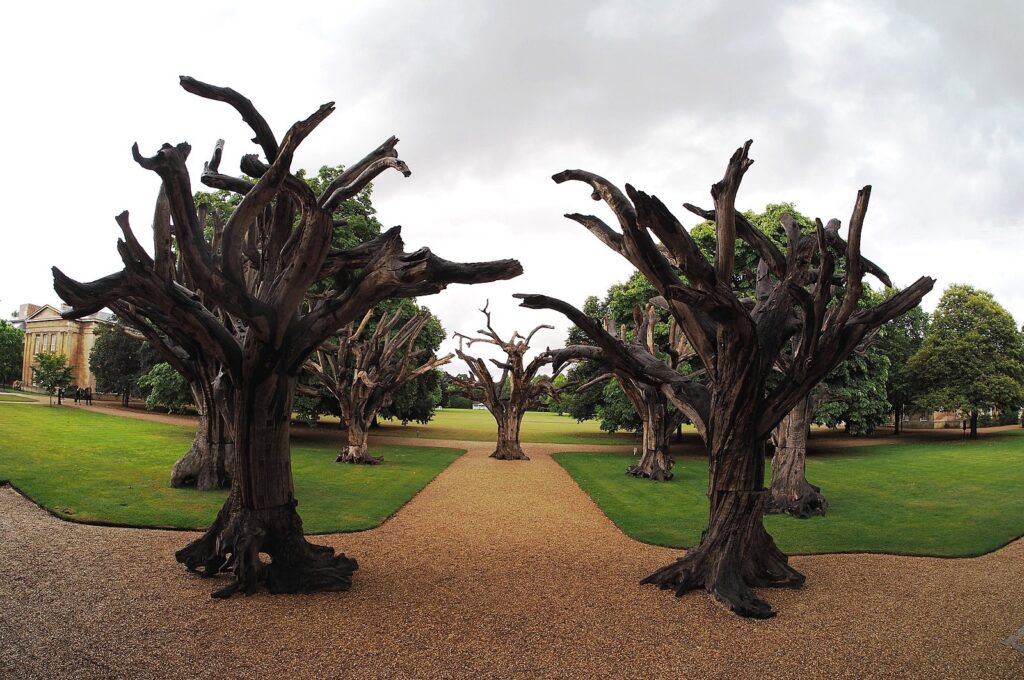
Ai Weiwei is a Chinese contemporary artist and activist known for his provocative and politically charged works. His Instagram account offers a glimpse into his creative process, his views on social and political issues, and his various art installations around the world. Ai Weiwei uses the platform not only to promote his art but also to raise awareness about human rights issues.
Kaws (@kaws)
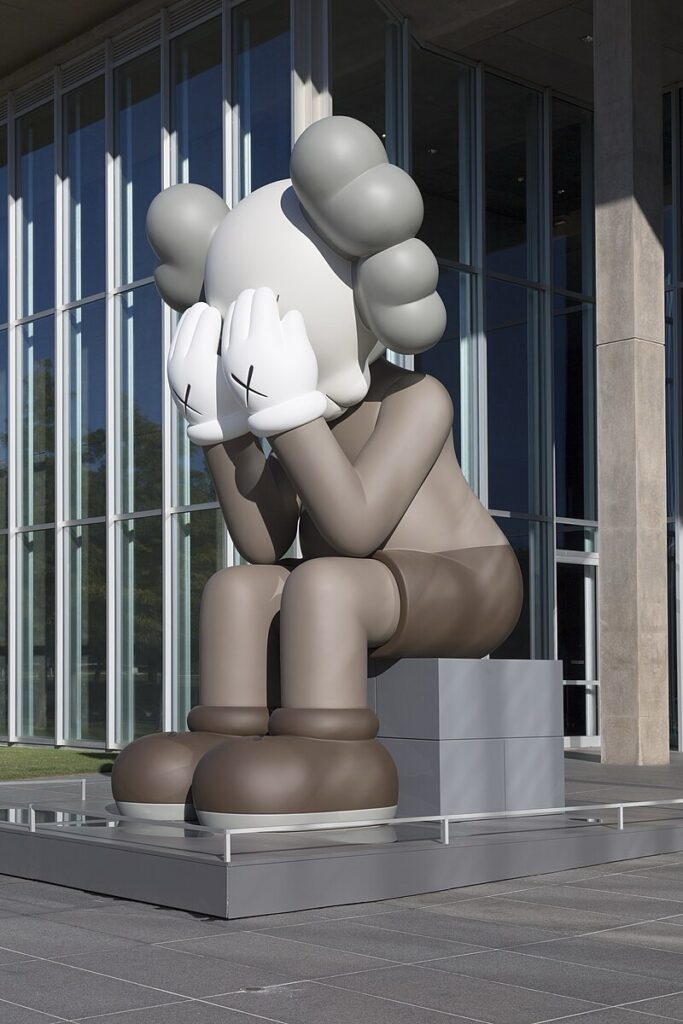
Brian Donnelly, known as Kaws, is an American artist and designer famous for his cartoon-like characters and sculptures. Kaws’ Instagram account features his latest works, collaborations with brands like Nike and Uniqlo, and glimpses into his creative process.
Shantell Martin (@shantell_martin)

Artist Shantell Martin in her New York studio (2014).
Shantell Martin is a UK visual artist known for her distinctive black-and-white drawings. Martin’s Instagram feed showcases her artwork, live drawing sessions, and collaborations with other artists and brands. She uses the platform to connect with her audience, share her artistic journey, and promote her exhibitions and projects.
Banksy (@banksy)
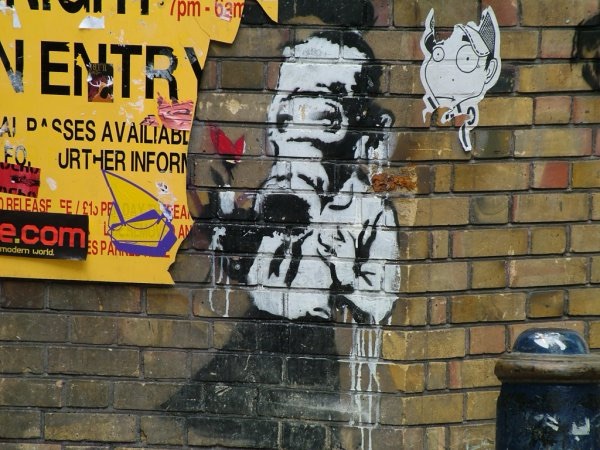
The elusive street artist Banksy has an Instagram account where he occasionally posts his latest works and public interventions. While he doesn’t post frequently, each of his posts garners massive attention and often sparks discussions about social and political issues. His account is a key platform for experiencing his art in real time.
JR (@jr)
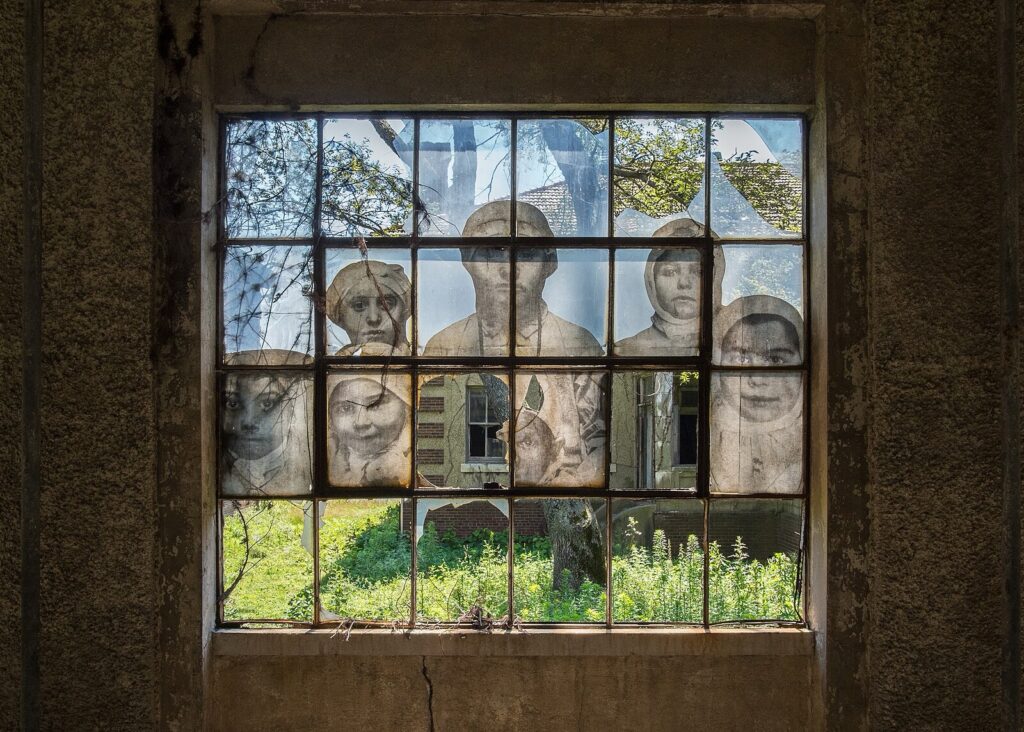
JR is a French street artist and photographer known for his large-scale public installations. His Instagram account documents his global projects, from photographing everyday people and pasting their portraits in public spaces to working on community-driven art initiatives. JR uses Instagram to tell stories and highlight social issues through his art.
Marina Abramović (@marinaabramovic)
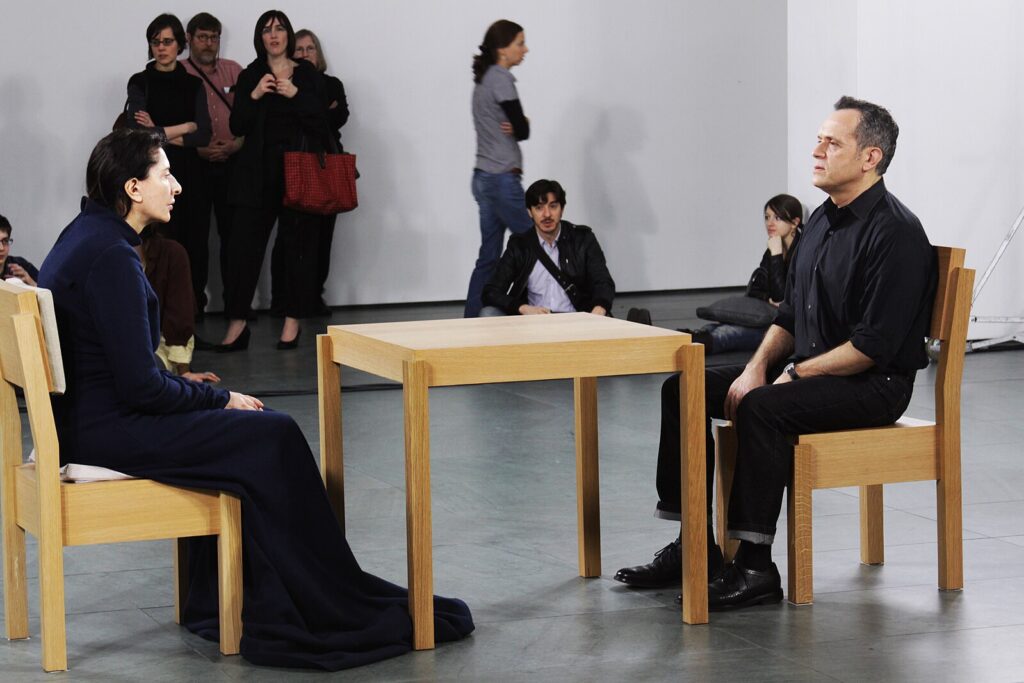
Marina Abramović is a performance artist whose work explores the limits of the body and the potential of the mind. Her Instagram account features behind-the-scenes looks at her performances, exhibitions, and personal reflections on art and life. Abramović’s use of Instagram bridges the gap between her often-immersive live performances and a wider digital audience.
Main Image credit: Abstract image by artist Takashipom at the London Gallery (2018). Licensed under Creative Commons
Hi all,
Nuala kindly pointed out that I’d somehow managed to turn off comments. Fixed now! Apologies.
As always a really interesting blog. I wanted it to go on and on.
I am fascinated by the topic ‘the psychology of influence’ be that on Instagram, TV, paper based publicity, bill boards etc.
A blog on Edward Bernays comparing his tactics to those of modern day Insta influencers would be fascinating.