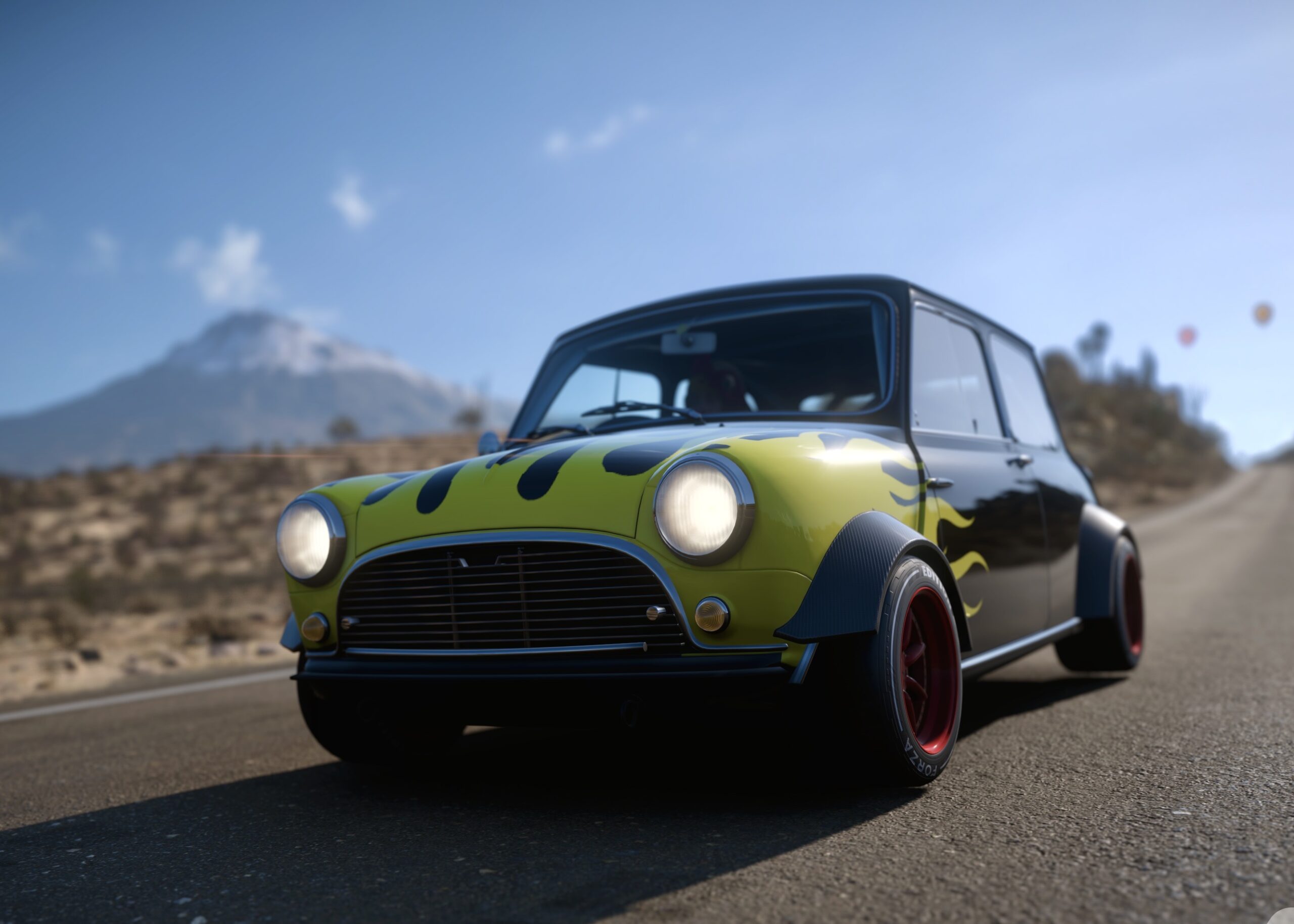
This is my old car. It’s a Mini. The number plate was SAU 641R and it was originally red. It cost £150 and I painted it Matt black with yellow flames. My dad rebuilt the engine. With its red wheels, I thought it looked splendid.
I still have photographs of most of my cars. Except for this one. Because, as you might have worked out already, this is not a photo of it at all. It’s an AI image made from memory.
You might now be feeling slightly cheated. Or wondering whether I actually did drive to my ever-so-sensible office job in a very unconventional matt black car with bright yellow flames. After all, you now know it isn’t real. It’s an image not a photograph. So what’s the point of it?
The point is that it felt wonderful to ‘see’ it again after all these years. I can now also show you what it looked like. But, I concede, that’s never going to be quite as good as having a photo of the real thing.
Don’t slouch, Uncle Bob. SMILE please!
Just as I lamented not having a photo of my old Mini, the Victorians seemingly had their regrets too. They photographed recently deceased family members (although it is hotly disputed how commonplace this was). This would have involved propping up the late Uncle Bob in his Sunday best (presumably before rigor mortis set in, which would have then made the posing of them a little awkward), using the posing stands commonly employed to hold subjects still during the long exposure times. Why would they do something so grotesque? Consider too that they would have needed to somehow transport the corpse of Uncle Bob to the photographic studio because people didn’t have cameras at home, so this would have been a significant undertaking (excuse the pun).
As ever with photography, context is important. Photography was new for the Victorians and widely viewed as a miraculous way of documenting objects with authenticity. Until then, painting was the only practical way of preserving a likeness of yourself or a loved one. The middle classes flocked to the booming photographic studios in most towns to be immortalised. Inevitably they sometimes wouldn’t have got around to it until Uncle Bob so inconveniently popped his clogs. So you can imagine the temptation for ‘one last family photo’. And it wasn’t just for the elders. Infant mortality was higher back then and photographing deceased infants was also thought to have happened. The miracle of photography would have provided something tangible to cling to at these sad times.
erm…is that ok?
The Victorians would have experimented with the social boundaries of new technologies just as we do today. Over time, society will come to accept some emerging practices as unacceptable while others will become the new norm. We are all doing it right now with AI. We discover we can do things, then employ them in ways that make society reflect on whether we should do them. Is it ok to video a pop concert? What about New Year’s Eve revelry?
Perhaps the Victorian attitude to photographing the dead teaches us something about regret – regret that we didn’t take more photographs of the people we love while they were alive.
What sort of photographs should we take? Maybe not the stiffly posed cheesy grins in response to the photographer saying ‘Smile!’ (Ironically, but unwittingly, emulating the Victorian post-mortem photograph?). What about photographs of those casual, endearing moments that seem so mundane to us today. One day these micro-events may become cherished memories. Did anyone ever regret taking too many photographs?
That’s unremarkable!
Objects, not just people, are important too. In the past, we would retain a lock of hair, or a cork from a celebratory champagne bottle to remind us of people and events. Linking us to our cultural past in a wider sense, photographers like William Eggleston, Martin Parr and Wolfgang Tillmans have taught us how the mundane can become the future’s fascinating curios with big stories to tell.
When Eggleston took his iconic tricycle photograph he caused great controversy and arguably sent photography in a whole new direction. But this wasn’t just a snap of a boring old bike, it was a statement about a powerful chariot: a youngster’s pride and joy, the low camera angle accentuating its prowess against its habitat of a suburban US residential street. The photograph was now imbued with meaning, not just formal representation. It allowed the viewer to feel how special it was, not just see what it looked like. When I look at the photograph, yes I see a child’s trike. But in my mind I also see my own purple Raleigh Chopper.
While we are photographing our (very much still alive) Uncle Bobs, maybe we should take more photographs of his pride and joy – his grey Kia Sportage – too, Because however normal it seems to us today, people in the future probably won’t believe the UK’s best selling car in a climate emergency was an SUV. Or that we most popularly select the colour of a slate grey nimbus cloud yet are blessed with more choice than Henry Ford’s famously imposed restriction of ‘any colour as long as it’s black’. Perhaps we’ll all have Minis with outlandish paint jobs in the future instead. Remember to take a photo if you do.
So true. Loved it